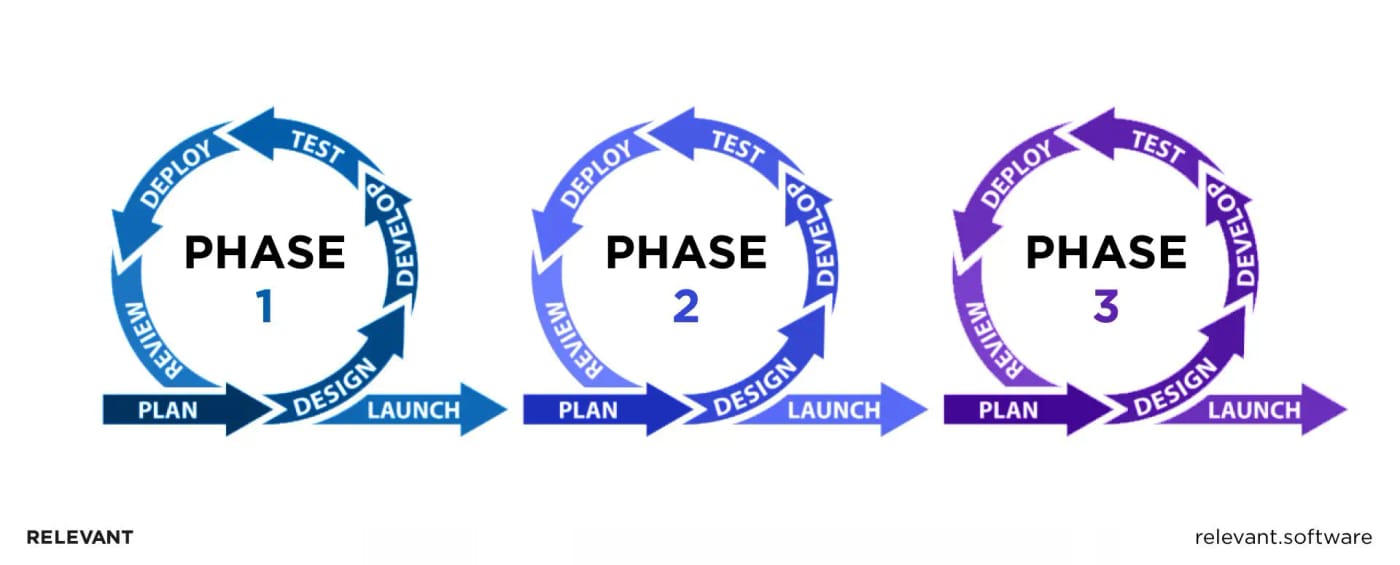
Most small business owners hear the word "DevOps" and assume it's something only Silicon Valley engineering teams need to worry about. It sounds technical, expensive, and far removed from the day-to-day reality of running a growing company in South Africa. In truth, the opposite is closer to the mark: the smaller your team, the more you stand to gain from getting this right — because you have the least capacity to absorb wasted hours and avoidable downtime.
This article explains what DevOps actually is, why it matters for an SME specifically, and how to adopt it sensibly without boiling the ocean.
First, what does "DevOps" even mean?
Strip away the buzzword and DevOps is simply a set of practices for building, releasing and running software in a reliable, repeatable way. The name is a mash-up of "development" and "operations" — the idea being that the people who write software and the people who keep it running should work as one flow, not two warring departments throwing work over a wall at each other.
For a small business, you rarely have separate departments at all. You might have one developer, or a small agency, or a single technical partner. So DevOps for an SME isn't about org charts — it's about automation and discipline: making sure that getting a change from "written" to "live and working" is fast, safe and boring. Boring is good. Boring means nothing exploded.
The hidden cost of deploying by hand
Let's make this concrete. Imagine your website or app needs an update — a new feature, a price change, a bug fix. In a business without any DevOps practices, that update often looks like this:
- A developer makes the change on their own laptop, where it "works fine".
- Late at night (to avoid disrupting customers), they manually copy files onto the live server.
- They cross their fingers and refresh the site.
- Something unexpected breaks. A setting was different on the server. A file was missed.
- Now it's 11pm, customers are seeing errors, and nobody is quite sure what changed or how to undo it.
Every step there is fragile. And the consequences compound over time in three expensive ways.
Releases become rare and scary. Because deploying is stressful and risky, the team avoids it. Improvements pile up and get shipped in big, infrequent, high-risk batches — which makes each release even more likely to break something.
Bugs reach customers. With no automated checks between "change made" and "change live", mistakes sail straight through to the people paying you.
Recovery is slow. When something does go wrong, there's no clean way to roll back. The team is debugging in production while customers wait.
For an SME, all three translate directly into the same things: lost sales, damaged trust, and a team that becomes afraid to improve their own product.
That last one is the quiet killer. When shipping is painful, you stop shipping. Your competitors who can release confidently will simply out-iterate you.
What DevOps gives you instead
Good DevOps practice replaces that fragile, manual ritual with an automated, dependable pipeline. Here are the core pieces, in plain language.
1. Continuous Integration (CI)
Every time a change is made, an automated system builds the software and runs tests against it — within minutes, with no human effort. If the change broke something, you find out immediately, before it ever reaches a customer. It's the equivalent of spell-check for your code: a safety net that's always on.
2. Continuous Delivery / Deployment (CD)
Once a change passes its checks, it can be released to production automatically (or with a single click). No midnight file-copying. The exact same process runs every time, so "it worked on my machine" stops being an excuse — because the machine isn't part of the equation anymore.
3. Containers
A container packages your application together with everything it needs to run — the right versions of every dependency — so it behaves identically on a developer's laptop, in testing, and on the live server. Tools like Docker make this standard. The payoff: an entire category of "but it worked in testing!" problems simply disappears.
4. Infrastructure as Code (IaC)
Instead of someone clicking around a hosting dashboard to set up servers (and forgetting exactly what they did), the entire setup is written down as code. That means your environment is reproducible, reviewable, and recoverable. If a server dies, you rebuild it from the definition in minutes instead of reconstructing it from memory.
5. Monitoring, logging and backups
You can't fix what you can't see. Monitoring tells you how your system is behaving and alerts you to problems before customers notice. Logging gives you the breadcrumb trail to diagnose issues quickly. Automated backups mean a worst-case scenario is an inconvenience, not the end of your business.
"Isn't this overkill for a small business?"
This is the most common objection, and it's a fair one. The honest answer: you don't need all of it on day one, and you definitely don't need Kubernetes to run a five-page website.
The trick is to match the practice to the business. DevOps is a spectrum, not an all-or-nothing switch:
- A simple brochure website might just need automated backups and a one-click deploy.
- A growing web application benefits enormously from CI/CD and containers.
- A platform serving thousands of users daily is where orchestration tools like Kubernetes start to earn their keep.
The mistake isn't starting small. The mistake is having nothing — no backups, no tested releases, no way to recover — and only discovering it the day something breaks.
A sensible adoption path for SMEs
If you're starting from scratch, here's the order that delivers the most safety for the least effort.
Step one: version control and backups. Get every line of your code into a system like Git, and make sure your data is backed up automatically. This is non-negotiable and surprisingly often missing.
Step two: a basic automated deploy. Replace manual file-copying with a pipeline that deploys your application the same way every time. Even a simple one removes the single biggest source of release stress.
Step three: automated checks. Add tests that run on every change, so obvious breakages are caught before they go live.
Step four: containerise. Package the app so it runs identically everywhere. This makes everything after it easier.
Step five: monitoring. Add visibility so you know how things are running and get alerted when they aren't.
Each step stands on its own and delivers value immediately. You can stop at any point that makes sense for your size and revisit later as you grow.
What this looks like in rands and hours
The benefits aren't abstract. Concretely, mature DevOps practices mean:
- Faster releases — improvements reach customers in minutes, so you can respond to feedback and competition quickly.
- Fewer outages — automated checks and monitoring catch problems early, protecting revenue and reputation.
- Faster recovery — when something does go wrong, you roll back in minutes instead of scrambling for hours.
- Lower long-term cost — less time spent firefighting, fewer emergency call-outs, and a team that can confidently keep improving the product.
For a business operating on thin margins — which describes most South African SMEs — that reliability is not a luxury. It's the difference between technology that quietly powers your growth and technology that becomes a recurring source of crisis.
Where security fits in: DevSecOps
There's a natural next step once the pipeline exists, and it's where we prefer to start: DevSecOps — weaving security into the automated pipeline rather than bolting it on at the end.
In practice that means the same automation that builds and tests your code also checks it for known vulnerabilities, scans your dependencies for security flaws, and keeps secrets (passwords, API keys) out of the codebase. Because it's automated and runs on every change, security stops being a once-a-year scramble and becomes a quiet, continuous habit. For a small business holding customer data under POPIA, that shift is worth a great deal — and it costs very little once the pipeline is already there.
The bottom line
DevOps isn't a product you buy or a box you tick. It's a way of working that makes shipping software safe and routine. You don't need the full enterprise toolkit, and you shouldn't pay for complexity you won't use. But every business that depends on software — and these days, that's nearly all of them — deserves the basics: tested releases, reproducible environments, real backups, and the confidence to improve without fear.
If deployments are currently a source of stress in your business, that's usually the very first thing worth fixing. Everything else gets easier once shipping becomes boring.