Ask almost any South African business owner where their customers contact them, and the answer is the same: WhatsApp. It's not email, not a contact form, not even a phone call any more. It's the green app that practically everyone has open all day. Yet most businesses still answer every single WhatsApp enquiry by hand, one message at a time — and quietly lose hours and customers in the process.
This article looks at what becomes possible when you connect a well-built AI agent to the channel your customers already use, where it pays off fastest, and how to do it without the common pitfalls.
The opportunity hiding in your chat list
Take an honest look at the messages your business receives. A large share of them are repetitive and predictable:
- "What are your opening hours?"
- "How much is X?"
- "Do you have Y in stock?"
- "Can I book for Saturday?"
- "Where's my order?"
- "Where are you located?"
Each one is quick to answer in isolation. But multiply them across a day, across every staff member who gets pulled away to respond, across evenings and weekends when customers still expect a reply — and you have a serious, invisible drain on time and attention. Worse, slow replies cost sales: a customer who doesn't hear back in a few minutes often just messages a competitor.
An AI agent connected to WhatsApp can handle this entire category of message instantly, around the clock, in a natural conversation — and quietly hand over to a human the moment something needs a person.
What exactly is an "AI agent" here?
Let's be precise, because the term gets thrown around loosely. In this context, an AI agent is a piece of software that:
- Understands a customer's message written in normal, everyday language.
- Looks up the relevant information from your business's own data.
- Responds helpfully and conversationally — and can take simple actions like capturing a lead or booking a slot.
- Knows its limits and escalates to a human when the request is complex, sensitive, or outside what it should handle.
That's the responsible version. It's not a robot pretending to be human, and it's not a rigid "press 1 for sales" menu. It's a helpful assistant that handles the routine so your people can handle the meaningful.
Grounded, not generic: the make-or-break detail
Here's the single most important concept, and the thing that separates a genuinely useful assistant from a frustrating one: grounding.
A generic chatbot — one you just point at a large language model and let loose — will happily guess. Ask it your delivery fee and it might invent a plausible-sounding number. That's worse than useless; it's actively damaging.
A properly built assistant uses an approach called Retrieval-Augmented Generation (RAG). In plain terms, before the AI answers, the system retrieves the relevant facts from your information — your product catalogue, your pricing, your policies, your FAQs — and instructs the AI to answer only from those facts.
The model isn't left to its imagination. It's constrained to what your business actually knows to be true. That's the difference between an assistant you can trust in front of customers and one you can't.
This is exactly how we build them: grounded in your real data, with clear boundaries on what they will and won't attempt to answer.
Where it pays off fastest
You don't have to automate everything at once. These are the highest-return starting points for most SMEs.
Customer support. Instant answers to the common questions above, at any hour. This alone often justifies the whole project by freeing up staff time and improving response speed.
Lead qualification and capture. When a potential customer messages, the agent can ask a few qualifying questions, capture their details, and route a hot lead straight to the right person — so nothing slips through the cracks at 9pm.
Bookings and reminders. For salons, clinics, restaurants and service businesses, the agent can check availability, take a booking, and send automated reminders that dramatically cut no-shows.
Order and status updates. Reduce the endless "where's my order?" messages by letting customers self-serve the answer instantly.
After-hours coverage. Your business effectively becomes responsive 24/7 without anyone working 24/7.
A realistic look at the limits
Responsible automation means being honest about what AI shouldn't do. A good agent is designed to escalate, not to bluff its way through everything.
- Complex complaints, sensitive issues, and anything involving a frustrated customer should route to a human quickly and gracefully.
- The agent should never invent information; if it doesn't know, it says so and hands over.
- Money matters and irreversible actions deserve a human check.
Done right, customers often can't tell whether they're getting an instant answer from the system or a person — and they don't care, because they got helped fast. Done badly, an over-reaching bot that pretends to know everything will damage trust faster than no bot at all. The design choices matter enormously.
Data privacy and POPIA
Because these conversations involve customer information, privacy isn't optional. A well-built system keeps personal data appropriately scoped and handled, is transparent about what's collected, and is designed with South Africa's POPIA requirements in mind. This is part of building it properly — not an afterthought.
Start small, prove it, then scale
The biggest mistake businesses make with AI is trying to boil the ocean — launching an ambitious, do-everything assistant that's half-baked in every direction.
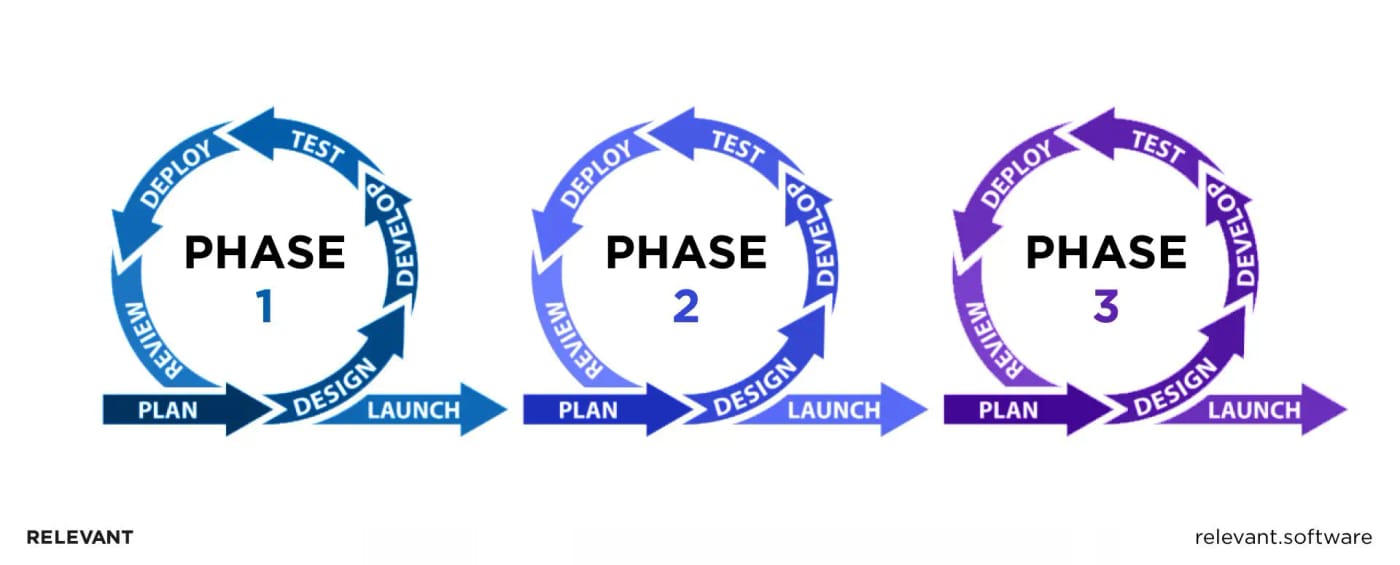
The smart approach is the opposite: a focused pilot on one high-value workflow. Pick the single most common, most time-consuming type of message and automate that well. Then measure real numbers:
- Average response time, before and after
- Number of messages handled without a human
- Hours of staff time freed up each week
- Conversion of after-hours enquiries that would previously have gone cold
With evidence in hand, you expand into the next workflow with confidence. That's how AI should be adopted — driven by demonstrated results, not hype or fear of missing out.
The bottom line
WhatsApp is the channel your customers already live on. Connecting it to a well-built, grounded AI agent is one of the rare automations that's both genuinely achievable for a small business and immediately valuable. The keys are getting the fundamentals right: ground it in your real data, give it clear limits, respect privacy, and start with one workflow you can measure.
Get those right, and you turn your busiest, most repetitive channel from a daily drain into a quiet, always-on member of the team.