Almost every established business has a software horror story. The project that started at three months and ran to twelve. The app that works but nobody can change because the developer vanished. The "cheap" website that turned out to cost a fortune in lost time and redos. The system that technically launched but never actually fit how the business works.
These outcomes are common — but they're not inevitable. Choosing the right partner is mostly about asking better questions before you commit, and knowing how to read the answers. This guide gives you both.
First, understand who you're choosing between
The market for building software isn't one thing. Each type of provider comes with a characteristic set of strengths and risks, and knowing them helps you ask sharper questions.
Large IT consulting firms offer depth and polish, but focus almost entirely on enterprise and government clients. For an SME they're usually inaccessible — high minimum project sizes, slow processes, and little personal attention.
Freelance developers are affordable and you talk to them directly, which is great. The risks: limited capacity for anything sizeable, quality that varies wildly between individuals, little ongoing support, and often no strategic or business perspective — they build what you ask, even if it's the wrong thing.
Offshore outsourcing firms advertise low hourly rates. What those rates can hide: time-zone friction that slows every exchange, communication and cultural barriers, no understanding of the South African business context, and real difficulty getting ongoing support when you need it.
Template builders and "Wix/WordPress developers" are cheap and fast for the simplest needs. But they hit a wall quickly: severe limits on customisation, poor scalability, and a template-driven rather than strategic approach. Fine for a basic brochure site; painful the moment you need something specific.
None of these is "bad" — each fits some situation. The point is to choose with your eyes open, which means asking the right questions.
The questions that actually matter
1. "Do I own everything?"
Before anything else: will you own the code, the data, the domain and the accounts? You should retain full ownership of all of it. If a provider is vague here, or wants to host everything on accounts only they control, treat it as a serious red flag. Vendor lock-in is how businesses end up held hostage by a system they paid for but can't leave.
A good partner hands you the keys without being asked.
2. "Will the same people be here after launch?"
An enormous amount of pain comes from the "launch and abandon" pattern: the system goes live, the builder disappears, and six months later you have nobody who understands it. Ask directly:
- Who supports the system once it's live?
- What are the response times if something breaks?
- Is ongoing maintenance even offered?
Software is never truly "finished" — it needs updates, security patches and the occasional fix. A partner who plans for the long term is fundamentally different from one optimising to get paid and move on.
3. "Can you explain it in plain language?"
This is a subtle but powerful test. A good partner makes you more informed with every conversation, not less. If discussions consistently leave you more confused — drowning in jargon, unable to follow the reasoning — that's a problem.
Clear communication usually reflects clear thinking. People who truly understand something can explain it simply.
You're going to be working closely with this person or team, possibly for years. If you can't understand each other now, it won't improve under deadline pressure.
4. "Will you tell me when not to build?"
This is the real character test, and it's the one most people never think to ask. A trustworthy partner will sometimes recommend an off-the-shelf tool, or a simple process change, instead of custom development — even though that means less money for them.
Anyone who wants to build everything from scratch, regardless of your actual situation, is selling, not advising. The willingness to say "honestly, you don't need us for this" is one of the strongest signals of integrity you'll find.
5. "How do you handle changes and overruns?"
Requirements change — that's normal. What matters is how it's handled. Ask how change requests are priced and communicated, and how they protect you from runaway scope. A good answer involves transparency: documenting changes, explaining their impact before doing them, and never surprising you on the final invoice.
6. "Can I see real work and talk to real clients?"
References and examples matter. Not glossy marketing — actual systems they've built and, ideally, clients you can ask about the experience. Pay special attention to what happened after launch.
Green flags to look for
Beyond avoiding red flags, here's what good looks like:
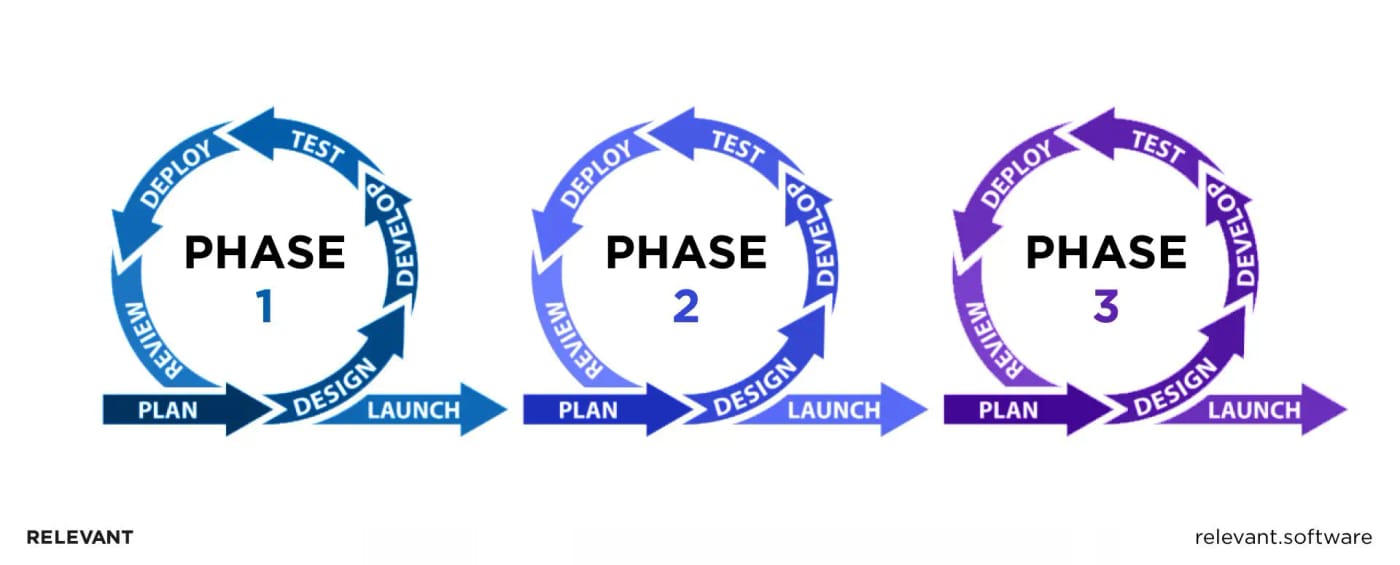
- Phased delivery — they propose breaking the work into stages so you're never over-exposed and can course-correct.
- A written proposal in plain language — clear problem statement, recommended approach, honest pricing, realistic timeline.
- Discovery before quoting — they want to understand your business before throwing a number at you.
- Comfort with your existing tools — they care about what you'll actually use, not just what's fun to build.
- Honest assessments — including the limits of what technology can do for you.
A practical pre-commitment checklist
Before you sign anything, make sure you have clear, satisfying answers to:
- Ownership of code, data, domain and accounts — confirmed in writing
- Defined support and maintenance arrangements after launch
- Plain-language communication you genuinely follow
- Evidence they'll advise honestly, not just sell
- Transparent change and pricing process
- Phased delivery so risk stays contained
- Real examples or references you can check
If a provider answers these well, you've already sidestepped the overwhelming majority of software horror stories. If they dodge them, you've learned what you needed to know — cheaply, and before it mattered.
The bottom line
The biggest, most expensive software mistakes are almost always avoidable, and they're rarely about technology. They're about ownership, support, communication and honesty. Get good answers to a handful of pointed questions up front, and you transform the odds in your favour — turning a nerve-wracking gamble into a confident, informed decision.